How to Build a Dog Enrichment Routine at Home (Step-by-Step)

Key Takeaways
- Use the evidence and verification questions in this guide to make a fit-based decision.
- Check current instructions, safety limits, pricing, and terms before acting.
- Pause and seek qualified help when the situation exceeds the guide’s scope.
“This post contains affiliate links. If you purchase through these links, I may earn a commission at no extra cost to you.”
A useful enrichment routine is not a calendar filled with increasingly difficult activities. It is a repeatable way to notice what a dog needs, choose a safe activity, observe the response, allow recovery, and adjust the next setup. The routine belongs to the household and the individual dog, so it should become simpler when life is busy and more cautious when health, stress, or behavior changes.
This step-by-step guide uses stages rather than a fixed number of daily sessions or minutes. Any timing examples should be created by the reader for the individual dog and checked against veterinary advice, product instructions, weather, environment, diet, and the dog’s response. The aim is sustainable variety, not constant occupation.
What counts as enrichment
Enrichment gives a dog safe opportunities to use natural and learned behaviors in an appropriate context. Sniffing, foraging, chewing suitable items, exploring, training, moving, resting, observing, and interacting socially can all play a role. The value comes from fit and choice, not from novelty alone.
An activity is not automatically enriching because it is marketed that way. If it creates fear, conflict, frustration, unsafe ingestion, exhaustion, or repeated over-arousal, the setup needs to change. A calm pause or decision to walk away can be useful feedback. The dog does not need to “complete” every activity.
Rest belongs inside the plan. A household that responds to every sign of energy with another stimulating task may remove opportunities to settle. The routine should help the dog move between engagement and recovery rather than remaining activated all day.
Stage A: establish a baseline
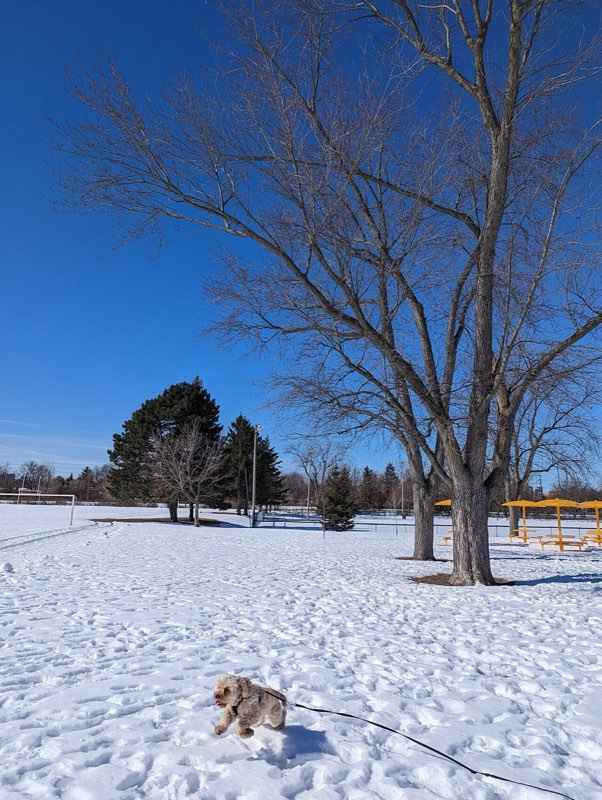
Before adding activities, observe an ordinary day. Note when the dog appears ready to engage, when settling is easy or difficult, what environmental events increase arousal, how the dog seeks interaction, and which activities already happen. Keep the notes descriptive rather than diagnostic.
Useful observations include whether the dog approaches food searches, carries objects, sniffs outdoors, watches movement, asks for contact, rests after an activity, or becomes more frantic. Also note practical constraints such as other pets, children, shared walls, flooring, weather, work calls, and storage. A routine that ignores the home will not survive ordinary life.
Do not interpret one day as a permanent personality profile. Health, sleep, routine disruption, heat, visitors, and unexpected noise can change behavior. The baseline is a working snapshot that tells the household where to start.
If there is 
Stage B: choose a purpose for the next activity
Each activity should have one clear practical purpose. The purpose might be to provide a food search, offer appropriate chewing, practice a familiar cue in a low-pressure setting, explore a safe environment, or support a transition toward rest. Avoid vague goals such as “wear the dog out” or “stop bad behavior.”
A clear purpose helps t
The purpose should remain open to revision. When the dog responds differently than expected, change the setup instead of forcing the original plan. Enrichment is a conversation through behavior, not a test of compliance.
Stage C: select from activity families
Food search and foraging
Food can be placed in an appropriate search or puzzle format when it fits the dog’s diet and health plan. The key variables are how visible the food is, how much manipulation is required, whether materials can be swallowed, and whether another animal could create conflict.
Begin with a setup the dog can understand. Difficulty can come from concealment, movement, material, location, or competing distractions; changing several at once makes the response hard to interpret. Follow product instructions and include food in the dog’s overall feeding decisions.
Sniffing and environmental exploration
Sniffing can occur during an appropriate outdoor route, in a safe home search, or around novel but nonthreatening objects. The household should choose environments where distance and exits are available and where local rules are followed. Exploration does not require approaching people, dogs, wildlife, traffic, or other triggers.
Let the dog gather information without constant cueing when the setting is safe. If body language shifts toward distress or over-arousal, increase distance or leave. The environment should remain easier to manage than the dog’s current capacity.
Training and problem solving
Short, understandable learning interactions can provide engagement and communication. Use familiar, humane methods, clear criteria, and rewards appropriate for the dog. The goal is not to escalate difficulty until failure; it is to create a setup where useful choices can occur.
General online education may help a reader organize ideas, but it cannot assess an individual dog. If training reveals fear, guarding, aggression, pain, or significant distress, stop and seek appropriate professional input.
Appropriate chewing, licking, and object interaction
Some dogs regulate well through suitable chewing or licking activities. Product material, size, damage, food compatibility, and supervision must be checked for the individual dog. No item should be described as indestructible or universally safe.
Inspect objects before, during, and after use. Remove damaged items and account for components. Dietary fillings, edible chews, and changes to feeding should be discussed with a veterinarian when health, allergies, digestion, or calorie balance is a concern.
Social connection and cooperative routines
Enrichment can be relational. Calm play, grooming conducted with consent and appropriate handling, familiar cue practice, and shared observation can provide useful interaction. The dog should have space to disengage rather than being held in the activity.
Household consistency matters. If different people use different cues, safety rules, or object policies, the routine can become confusing. Agree on simple shared practices and keep children and vulnerable people outside interactions that require adult judgment.
Rest and low-stimulation time
Rest is not an empty category. A predictable resting area, reduction in household pressure, and a transition after activity can help the dog disengage. The right environment depends on the dog and should not involve forced confinement outside appropriate training and welfare practices.
Observe whether the dog can settle after the chosen activity. If every enrichment setup leads to pacing, demand behavior, or difficulty resting, reconsider intensity, timing, and type. Professional help may be useful when settling problems are persistent or severe.
Stage D: prepare the environment
Set up before inviting the dog. Remove hazards, secure exits, separate animals when food or objects could create competition, and keep cleanup materials available. Read current product instructions rather than relying on assumptions from a category name.
Make the first version easier than the most elaborate version imagined. Expose part of a search, stabilize an item only in a manner allowed by its instructions, or use a familiar environment. Avoid creating loops, entanglement, unstable surfaces, sharp edges, or improvised mechanisms.
Plan how the activity ends. The household should be able to remove the item without conflict, create distance, or redirect to an appropriate transition. If object removal regularly causes guarding, do not turn the routine into repeated confrontation; seek qualified behavior guidance.
Stage E: invite, observe, and adjust
Invite participation without forcing the dog toward the object or environment. Watch the first approach and the strategy that follows. Sniffing, gentle pawing, licking, looking back, pausing, and walking away can all be meaningful.
Signs that the task may be too difficult or intense include frantic movement, repeated hard biting, inability to disengage, escalating vocalization, avoidance, freezing, or conflict around the resource. These signals require context and are not a diagnosis. The practical response is to reduce pressure, create distance, simplify, or stop.
Adjust one element when possible. Make food more visible, choose a quieter room, reduce competing movement, or return to a familiar action. If the dog remains distressed, end the session. Persistence is not the objective.
Stage F: close the activity and support recovery
End while removal and transition can still happen safely. Follow the product’s cleaning instructions, inspect materials, account for components, and store items where the dog cannot access them unsupervised. If ingestion or injury may have occurred, contact a qualified veterinarian.
Allow a low-pressure transition. That may involve access to an appropriate rest area, ordinary water access, or simply a quieter household period. Avoid assuming that visible excitement means the dog needs another challenge immediately.
Observe recovery. Does the dog settle, continue searching, pace, solicit more activity, or show discomfort? The answer helps shape the next choice. A routine becomes individualized through this feedback loop.
Stage G: review the pattern
A simple record can include the activity family, environment, setup, the dog’s initial strategy, changes in engagement, how the activity ended, and what recovery looked like. Keep it factual. “Sniffed, then carried the item and settled after removal” is more useful than “loved it” or “failed.”
Review for patterns rather than scores. A dog may prefer scent work in one environment and object interaction in another. Certain times or household events may make engagement harder. Use those patterns to simplify the routine and avoid repeated mismatches.
Do not increase difficulty just because an activity looked easy. Repetition can build confidence and predictability. Variation can come from context and choice without turning every session into a more complex puzzle.
A flexible weekly planning model
Use a menu rather than a rigid quota. The menu can contain a food-search option, an exploration option, a familiar learning interaction, an appropriate object activity, a social routine, and deliberate recovery. The household chooses from the menu based on the dog’s current state and practical conditions.
Any schedule should be treated as a reader-created example, not an expert prescription. The individual dog’s health, age, diet, weather, physical capacity, environment, and professional advice control the plan. Missing a planned activity is not a welfare failure when the dog’s needs are otherwise met.
Rotation should reduce clutter, not create constant novelty. Familiar activities can remain valuable, and safe free or low-cost options may be preferable to purchasing more products. A paid resource is useful only when it solves a defined planning or education problem.
Common routine mistakes
One mistake is treating intensity as value. A dog that is exhausted or frantic is not necessarily enriched. Another is changing too many variables, which makes it impossible to know whether the food, object, room, timing, or difficulty shaped the response.
A third mistake is ignoring maintenance. Dirty puzzles, damaged fabric, missing parts, and inaccessible storage turn good intentions into risk. Choose fewer formats that the household can inspect and clean reliably.
A fourth mistake is using enrichment to avoid medical or behavior assessment. Sudden destructiveness, inability to settle, conflict, fear, or aggression may require professional evaluation. The routine can support daily life, but it should not conceal a worsening concern.
Limitations and when to seek professional help
This article does not prescribe food, exercise, treatment, or a behavior plan. It cannot assess body language in context, determine the cause of behavior, or certify that a household item or commercial product is safe for an individual dog.
Consult a qualified veterinarian for possible pain, injury, ingestion, choking, diet questions, sudden behavior change, or health concerns. For serious aggression, a bite history, significant distress, resource guarding that creates risk, or behavior the household cannot manage safely, consult a qualified veterinarian and an appropriately qualified behavior professional.
Conclusion
Build the routine as a loop: observe, choose a purpose, select a suitable activity family, prepare the environment, invite participation, adjust, close safely, and review recovery. The loop is more important than a fixed calendar.
A sustainable routine respects the dog’s ability to disengage, the household’s capacity to supervise, and the limits of general information. Keep what produces safe, voluntary engagement, simplify what creates confusion, and seek qualified help when health, distress, aggression, or bite risk enters the picture.
Related internal-link candidates
Compare physical formats in 5 Dog Enrichment Puzzle Toys. Review structured education in Brain Training for Dogs Review and use How to Calm a Reactive Dog: Proven Training Principles when distance, triggers, and recovery are part of the routine decision.
FAQ
Is this a universal recommendation?
No. Fit depends on the reader’s situation and what can be verified now.
What should I verify next?
Confirm current instructions, materials, safety guidance, price, access, and refund or return terms.
When should I stop?
Stop when there is a safety concern or uncertainty beyond your current skills, and seek qualified help.